2026-11-14 · Derek Morales
Checking for Hidden Leaks in Pre-1980 Austin Homes
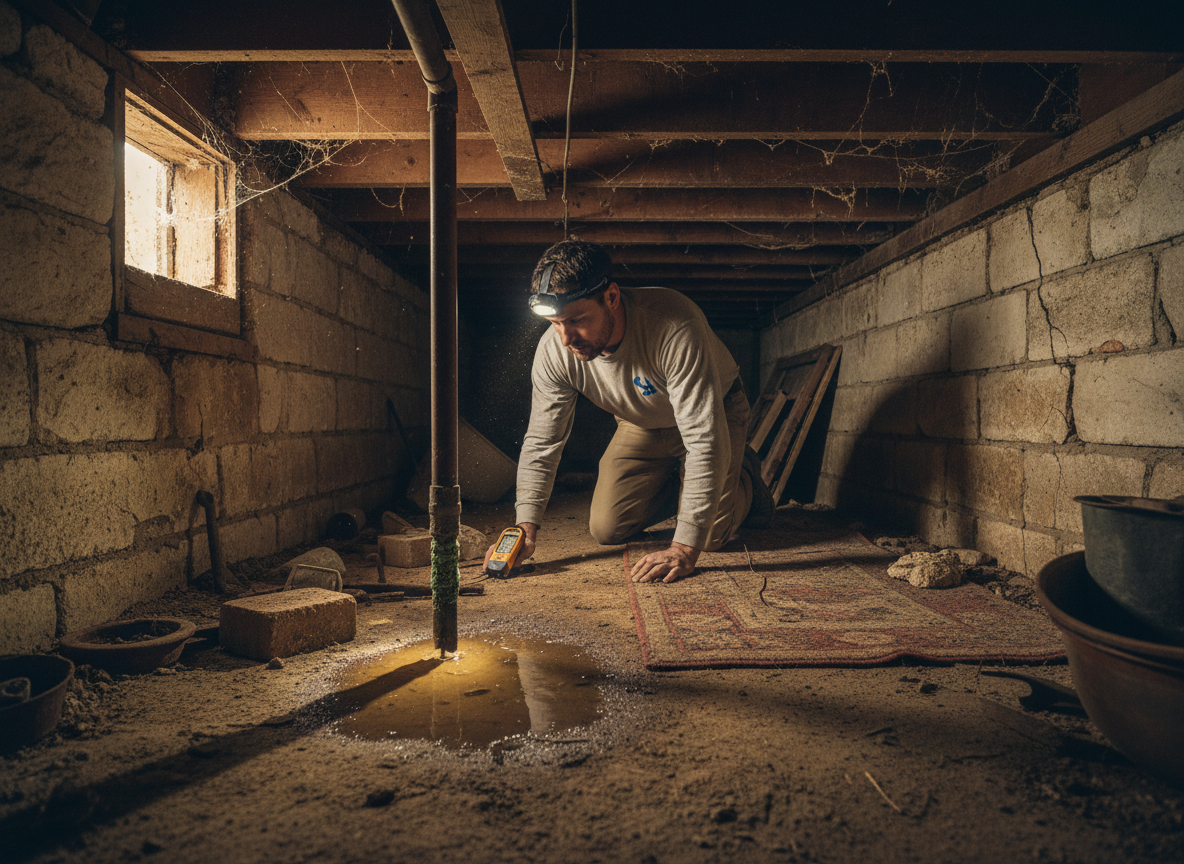
Pre-1980 Austin homes commonly develop hidden leaks in galvanized supply lines that last 40–60 years before pinhole failures appear. Start by monitoring water meter readings with all fixtures off for two hours; a moving dial indicates flow from an undetected source. In neighborhoods such as Hyde Park and Clarksville, where many bungalows date to the 1920s–1950s, these pipes run through crawl spaces or under slabs and react to the area's expansive clay soils that shift during mild winters and hot humid summers.
Checking Water Meter and Pressure Patterns
Austin's older stock in East Austin and Barton Hills often shows pressure drops when multiple fixtures run simultaneously. Turn off the main valve at the meter near the street, note the reading, and recheck after 30 minutes. Any movement points to a leak between the meter and the house. In Travis Heights homes built on slopes, gravity can mask slow drips until they reach lower levels near Lady Bird Lake. Record readings at the same time each day for a week to catch patterns tied to spring wildflower season rains that saturate soil around foundations.
Compare indoor and outdoor pressure at hose bibs during peak summer humidity. Drops below 40 psi at the farthest fixture often trace to corrosion inside ¾-inch galvanized lines common before 1980. Residents in Mueller and Zilker notice these changes faster because their homes sit on flatter lots where water pools rather than drains away.
Inspecting Slab and Crawl Space Areas
Many pre-1980 homes in Westlake and South Congress rest on post-tension slabs that crack when tree roots or shifting clay pull moisture toward the structure. Look for damp spots on carpet edges or baseboards near exterior walls after heavy spring rains. Use a moisture meter on drywall 6–12 inches above the floor; readings above 15 percent indicate seepage from below.
Crawl spaces under Clarksville bungalows collect condensation during humid summers, accelerating rust on cast-iron drains. Shine a flashlight along joists for white efflorescence or darkened soil patches. In Round Rock and Pflugerville homes from the same era, check where supply lines enter the foundation for mineral stains that mark slow leaks over months.
Using Moisture Meters and Thermal Imaging
Handheld meters give reliable readings on drywall and wood framing in 3–5 seconds per spot. Scan around toilets, tubs, and kitchen sinks first, then move to utility rooms where galvanized lines transition to copper. Thermal cameras reveal temperature differences of 3–5 degrees Fahrenheit along walls when water cools the surface, especially useful after mild winter nights in Travis County.
Focus on areas within 4 feet of exterior doors in East Austin properties, where wind-driven rain during storms pushes moisture into stucco cracks. Document readings with photos and dates to track changes across seasons. Homeowners near the University of Texas Tower or Mount Bonnell often combine meter checks with these tools before calling for water damage repair.
When to Schedule Professional Assessment
Persistent meter movement or moisture readings above 20 percent warrant evaluation by a local crew familiar with Austin's housing stock. Technicians can isolate sections of line without full excavation in many Hyde Park cases. For homes in Cedar Park or nearby areas, early intervention prevents mold growth that thrives in the region's humidity. Review related costs in older neighborhoods through typical water damage repair costs in East Austin and consider how spring storms near Lady Bird Lake accelerate the same problems in pre-1980 construction.