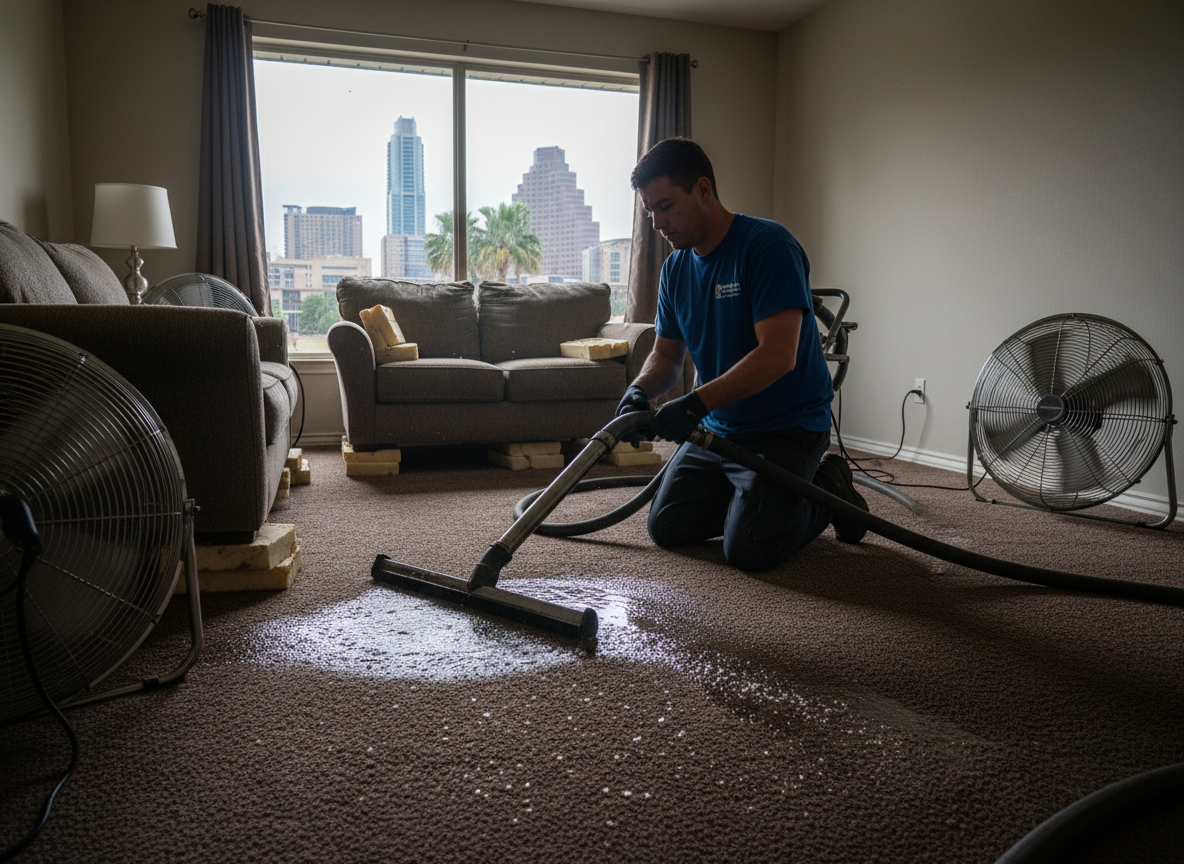
Dripping Springs homes sit on limestone terrain west of Austin where spring rains and sudden downpours send water into crawl spaces and slab foundations fast. Crews from 9711 Beck Cir reach properties via US 290 or Ranch Road 12, often within the hour when calls come from Belterra or older ranch subdivisions.
Many houses here combine older stone ranch builds with newer custom homes on larger lots. Water from nearby springs and seasonal creeks can pool against foundations or overwhelm septic fields, so extraction and drying steps must account for the rocky soil that slows natural drainage.
Technicians check attics for roof leaks common after hail and inspect irrigation lines that run close to house pads. Work stays focused on fast moisture removal before mold sets in during the humid summer stretch.
Around 28. Dripping Springs
We regularly work near:
- 📍Dripping Springs Ranch Park
- 📍Founders Park
- 📍Mercer Street
- 📍Dripping Springs Elementary School
- 📍US 290
- 📍Ranch Road 12
Water Damage Repair in 28. Dripping Springs — Local Notes
- •Limestone bedrock under most lots forces water to sheet across the surface instead of soaking in, pushing moisture under pier-and-beam homes faster than in flatter Travis County neighborhoods.
- •Many properties rely on septic systems and private wells, so crews route extraction hoses away from drain fields and avoid disturbing well lines during drying equipment placement.
- •Newer subdivisions along US 290 have tighter setbacks and shared drainage swales that can back up during heavy spring rains, requiring targeted dehumidification along shared property lines.
- •Older ranch homes on larger acreage often have detached garages or workshops with separate plumbing that can leak unnoticed until water reaches the main residence.