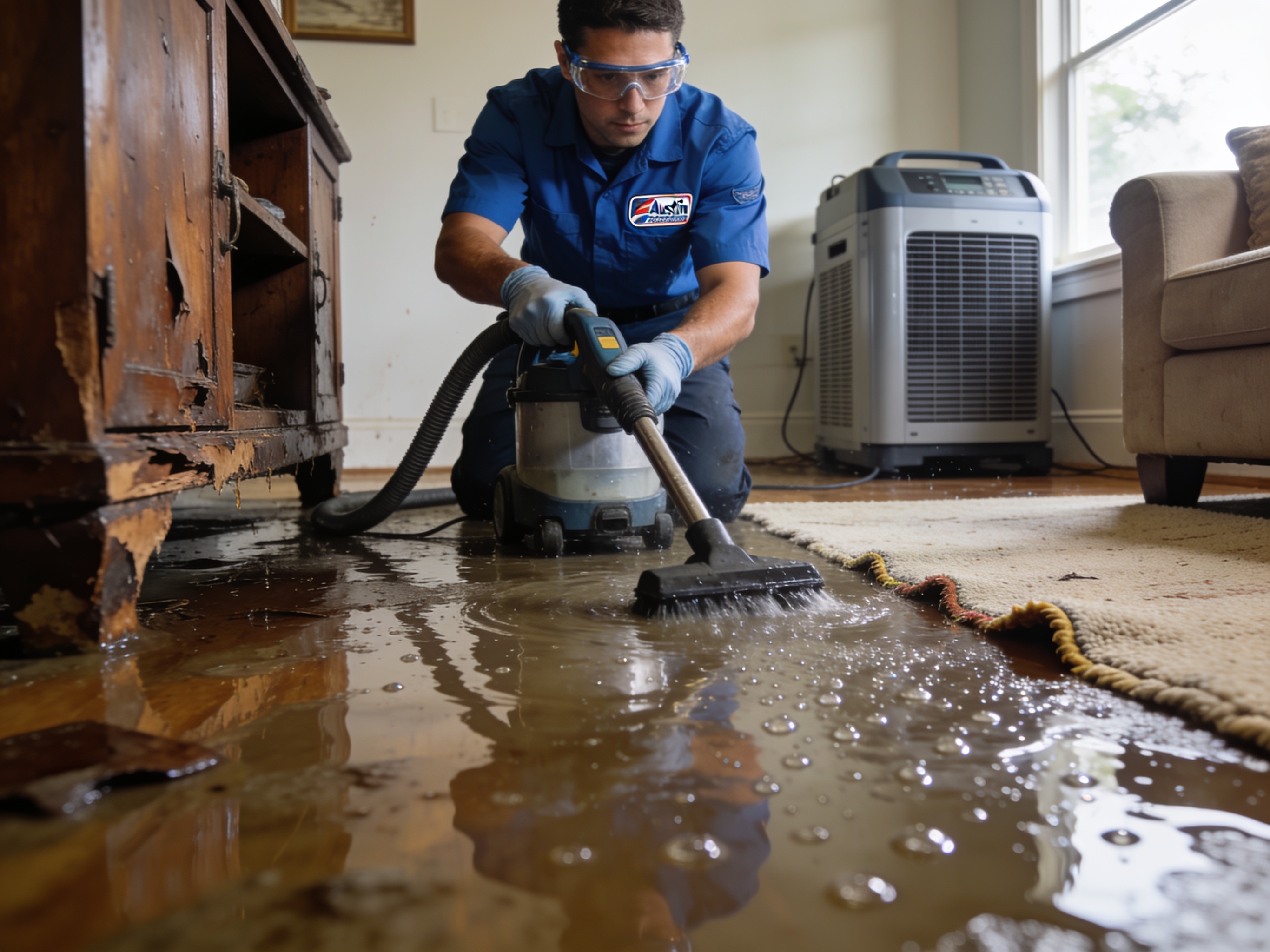
Austin's hot humid summers turn minor leaks into major problems fast, especially in older wood-frame homes built before 1970 in Hyde Park and Clarksville. Moisture lingers in crawl spaces and behind plaster walls, feeding mold within 48 hours when dew points stay high. Technicians use moisture meters and thermal imaging to locate hidden water in Travis County properties where clay soils shift and crack foundations during mild winters.
Spring rains and occasional flash flooding near Lady Bird Lake and Barton Creek affect low-lying areas like Travis Heights and Barton Hills. Water enters through pier-and-beam foundations common in these neighborhoods, saturating subfloors and insulation. Restoration crews extract standing water then deploy industrial dehumidifiers sized for Austin's humidity load rather than generic equipment that leaves residual moisture.
East Austin and Mueller homes often have slab-on-grade construction with plumbing routed under concrete, making leak detection slower. Crews cut strategic access points, dry the slab with directed heat, and document everything for insurance adjusters. Properties near the University of Texas and Texas State Capitol face additional challenges from shared walls in older multi-family buildings where water migrates between units.
Nearby cities like Round Rock, Pflugerville and Cedar Park see similar humidity-driven issues but with newer builds that still suffer from poor grading around foundations during heavy spring downpours. The same drying protocols apply, adjusted for larger square footage and different insulation types found outside central Austin.
Technician insight
In Austin the thing that catches most people out with 24/7 water damage restoration is how quickly humidity from Barton Springs and Lady Bird Lake re-saturates already damp plaster in pre-1960 homes in Travis Heights once the initial extraction finishes.
Hyde Park Crawl Space Flood
Heavy spring rain sent water under a 1940s pier-and-beam home near 45th Street. Crews found saturated insulation and mold starting on joists. Extraction and targeted drying prevented spread into the main floor, restoring safe conditions without full floor removal.
24/7 Water Damage Restoration Services We Offer
✓Emergency Water Extraction
Rapid removal of standing water from homes in Downtown and South Congress using truck-mounted pumps to prevent further saturation of subfloors.
✓Structural Drying After Leaks
Targeted drying of walls, ceilings and floors in humid Austin summers with HEPA air movers and dehumidifiers calibrated for Travis County moisture levels.
✓Crawl Space Water Removal
Extraction and drying under pier-and-beam homes common in Hyde Park and Clarksville where clay soil traps moisture against joists.
✓Slab Leak Drying and Repair Prep
Access and drying of concrete slabs in East Austin and Mueller properties before plumbing repairs to stop hidden mold growth.
✓Attic and Roof Leak Restoration
Drying of insulation and rafters in Zilker and Westlake homes after storm damage, followed by mold prevention treatment.
✓Commercial Water Damage Response
After-hours extraction and drying for businesses near the Texas State Capitol and University of Texas Tower with minimal operational disruption.
24/7 Water Damage Restoration Cost in Austin, TX
| Service | Typical Range | What Affects It |
|---|---|---|
| Emergency Extraction Visit | $450–$900 | Higher in multi-story or limited-access properties like those in Clarksville. |
| Full Structural Drying | $1,200–$3,500 | Depends on square footage and duration needed during humid summer months. |
| Crawl Space Drying | $800–$2,200 | Varies with soil saturation and pier-and-beam access in Hyde Park homes. |
| Slab Leak Drying | $1,000–$2,800 | Affected by concrete removal scope in East Austin slabs. |
Ranges are typical for Austin, TX and confirmed with an exact written quote before any work starts.
How it works
- 1
On-Site Assessment
Technician arrives within hours, maps moisture with meters, and identifies affected materials in the specific Austin neighborhood.
- 2
Water Extraction
Remove standing water and saturated debris using pumps and vacuums sized for local foundation types.
- 3
Drying and Dehumidification
Set up equipment to pull humidity down to safe levels, monitoring daily in Austin's variable weather.
- 4
Final Inspection and Handover
Verify dryness with readings, remove equipment, and provide documentation for insurance.
Pricing
Pricing varies by extent of water, materials affected, and access in older Austin homes.