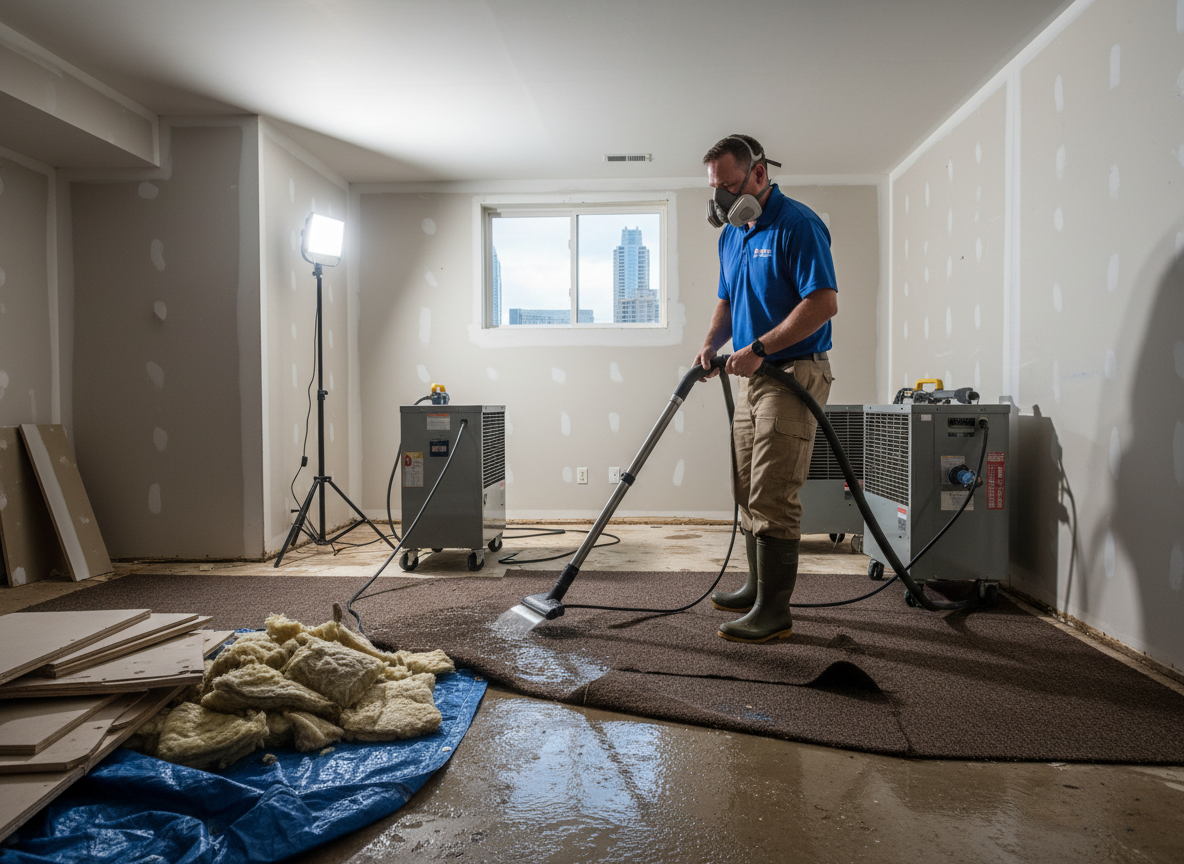
Austin summers bring high humidity that keeps moisture trapped inside walls long after the initial leak stops. Older homes in Hyde Park and Clarksville often have plaster and lathe construction that absorbs water differently than modern drywall, so extraction must reach behind baseboards and into subfloors or hidden pockets remain wet. Travis County building codes require proper documentation of moisture levels before any wall repair can begin, which is why we log readings at every visit.
Flash flooding from Lady Bird Lake or Barton Creek can push water into crawl spaces and slab foundations common in Barton Hills and Westlake. Once water sits under the slab, it migrates toward the University of Texas Tower area where many 1920s–1950s homes sit on expansive clay soil that swells and cracks when it dries too fast. We use targeted air movers and dehumidifiers sized for these conditions rather than generic equipment.
Spring wildflower season often coincides with sudden downpours that overwhelm gutters on South Congress and Travis Heights bungalows. When that happens, water enters through roof valleys and window sills that were never flashed for Austin’s intense rain events. We check attic insulation for saturation because wet cellulose can drop R-value and grow mold within days in our mild winters.
East Austin and Mueller neighborhoods have seen rapid renovation of mid-century homes, which means mixed plumbing materials that fail at different rates. When a galvanized line bursts near a recent PEX retrofit, water travels along the transition points and soaks insulation that was never removed during the remodel. Proper drying here requires pulling baseboards and sometimes sections of flooring to reach the wet cavity.
Technician insight
In Austin, the thing that catches most people out with water damage restoration is how quickly our high summer humidity turns a small leak behind a baseboard into mold that travels through the plaster in 1940s Hyde Park homes. Clay soil under slabs in Westlake and Barton Hills also holds moisture against foundations longer than people expect, so we keep equipment running longer than the same job would need in drier climates.
Slab Leak in Barton Hills
Water from a failed supply line under a 1960s slab had wicked into the subfloor and baseboards across the kitchen and hallway. We mapped moisture levels, extracted water, and ran targeted drying under the slab for five days until readings matched the unaffected rooms. The homeowner avoided full floor replacement and the home passed final moisture verification for insurance.
Water Damage Restoration near Me Services We Offer
✓Emergency Water Extraction
Rapid removal of standing water from kitchens, bathrooms, and basements in Austin homes using truck-mounted pumps sized for Travis County rainfall volumes.
✓Structural Drying for Slab Homes
Targeted drying under concrete slabs and in crawl spaces common throughout Barton Hills and Westlake where clay soil holds moisture against foundations.
✓Mold Prevention After Leaks
Humidity control and antimicrobial treatment in older Hyde Park and Clarksville homes where summer humidity turns small plumbing leaks into hidden mold colonies.
✓Historic Home Water Restoration
Careful drying and material salvage for plaster and lathe walls in Downtown and Travis Heights properties built before 1950 that cannot be treated like modern drywall.
✓Attic and Insulation Drying
Removal of wet cellulose or fiberglass in East Austin and Mueller attics after roof leaks or HVAC condensation common during Austin’s humid months.
Water Damage Restoration near Me Cost in Austin, TX
| Service | Typical Range | What Affects It |
|---|---|---|
| Emergency Water Extraction | $400–$900 | Varies by volume and access in slab versus crawl-space homes |
| Full Structural Drying | $800–$2,200 | Higher in older Hyde Park homes with plaster walls and multiple rooms |
| Mold Prevention Treatment | $350–$750 | Depends on square footage and humidity levels during Austin summers |
| Attic Insulation Drying | $500–$1,100 | Includes removal of wet material when cellulose is saturated |
Ranges are typical for Austin, TX and confirmed with an exact written quote before any work starts.
How it works
- 1
On-Site Assessment
We arrive at your Austin address, locate the water source, and document moisture levels in walls, floors, and subfloors using meters calibrated for local building materials.
- 2
Water Removal
Standing water is extracted with pumps and wands, then hidden moisture is pulled from cavities using air movers and dehumidifiers matched to Austin humidity.
- 3
Drying And Monitoring
Daily moisture readings continue until levels match pre-loss conditions, with adjustments for clay soil and older construction found in neighborhoods like Hyde Park.
- 4
Final Documentation
Readings and photos are provided for insurance and Travis County permit records before any reconstruction begins.
Pricing
Upfront quotes after inspection; final cost depends on square footage affected, depth of water migration, and whether older plaster or slab construction is involved.