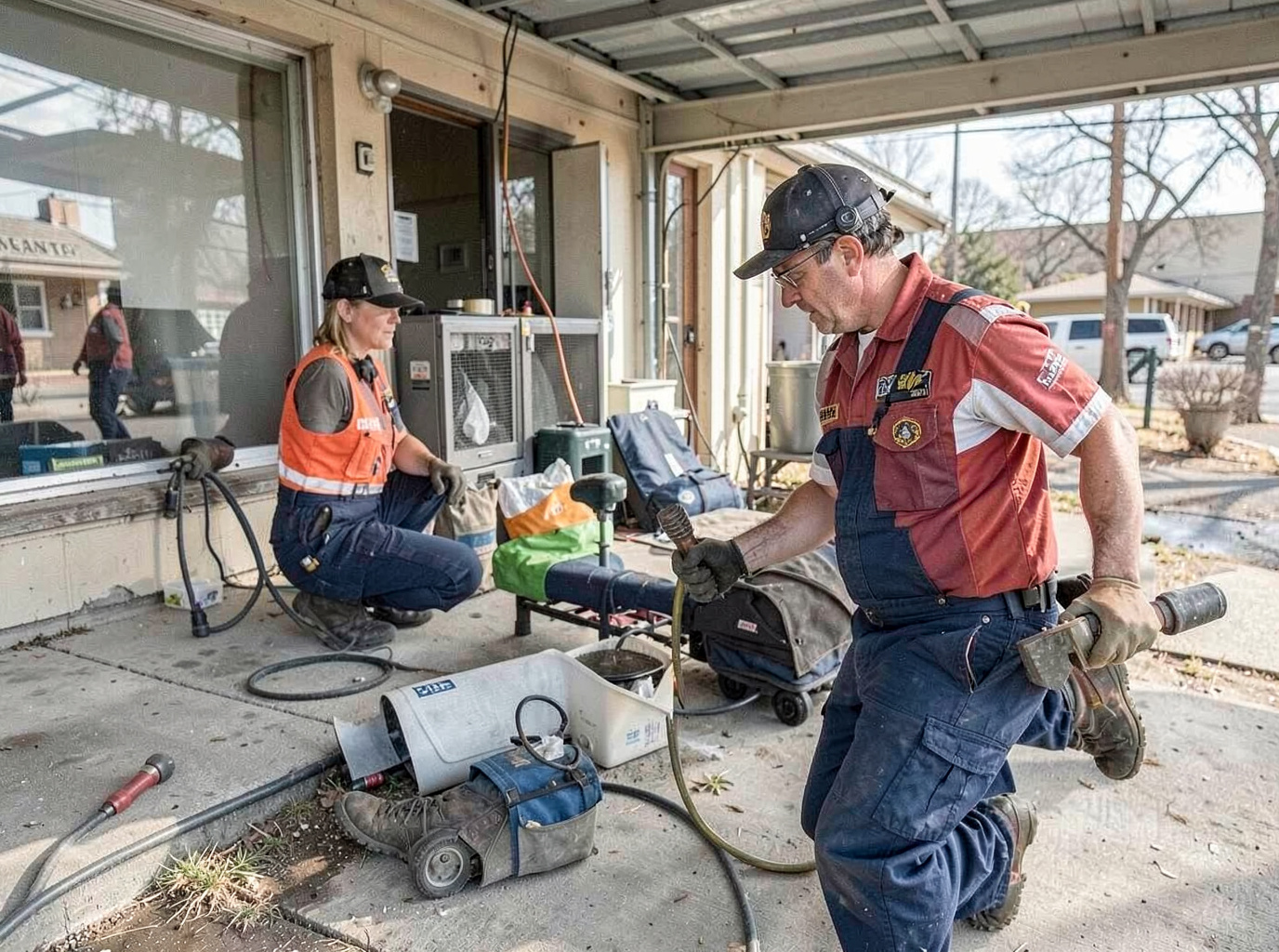
Austin's hot humid summers accelerate mold growth within 24 to 48 hours after water intrusion, especially in older homes built before 1980 in neighborhoods like Clarksville and Hyde Park. These properties often feature pier-and-beam foundations with crawl spaces that trap moisture from Barton Creek overflows or Lady Bird Lake backups. Technicians must pull carpets, open wall cavities and run commercial dehumidifiers for days longer than in drier climates to meet Texas mold remediation guidelines.
Flash flooding along the Colorado River corridor and spring rains that soak Zilker Park and Barton Hills create different job conditions than the occasional pipe burst in Westlake or Mueller. Crews working near the University of Texas Tower or South Congress routinely deal with slab leaks under 1960s ranch homes where water travels under tile into adjacent rooms. Extraction equipment must navigate narrow streets in Travis Heights while avoiding root systems from mature oaks that complicate access to buried lines.
Nearby cities such as Round Rock, Pflugerville and Cedar Park see similar humidity-driven issues but with newer construction that sometimes lacks proper grading around foundations. Restoration teams based at 9711 Beck Cir coordinate with Travis County inspectors when water reaches electrical panels or HVAC returns in East Austin duplexes. Proper documentation of moisture readings at multiple depths prevents callbacks once the mild winter temperatures arrive and hidden pockets reappear.
Technician insight
In Austin the thing that catches most people out with Emergency Water Damage Restoration is how quickly mold sets in during hot humid summers inside pier-and-beam homes in Hyde Park and Clarksville where crawl spaces stay damp long after surface water is gone.
Zilker Park Area Flooding
Heavy spring rain sent water under a 1970s home near Zilker Park. Inspection showed moisture traveling along the slab into two bedrooms. Extraction and targeted drying prevented mold while the family stayed in place.
Emergency Water Damage Restoration Services We Offer
✓Emergency Water Extraction
Rapid removal of standing water from homes in Downtown and East Austin using truck-mounted pumps to limit secondary damage.
✓Structural Drying and Dehumidification
Placement of industrial air movers and dehumidifiers in crawl spaces and attics common to Hyde Park and Clarksville properties.
✓Mold Remediation After Flooding
Containment and removal of mold growth triggered by Austin's humid summers in affected wall cavities and subfloors.
✓Carpet and Pad Removal
Safe disposal of water-soaked flooring materials in Travis Heights and Zilker homes where reinstallation is not feasible.
✓Content Drying and Restoration
Treatment of furniture, documents and belongings from Mueller and Barton Hills residences exposed during pipe failures.
Emergency Water Damage Restoration Cost in Austin, TX
| Service | Typical Range | What Affects It |
|---|---|---|
| Emergency Water Extraction | $300–$900 | Varies with volume and access in older East Austin homes. |
| Full Structural Drying | $800–$2,200 | Longer run times needed during humid summer months. |
| Mold Containment And Removal | $1,200–$3,500 | Depends on square footage and hidden growth in crawl spaces. |
Ranges are typical for Austin, TX and confirmed with an exact written quote before any work starts.
How it works
- 1
Arrival And Assessment
Technician arrives within the service window, locates the water source and maps affected rooms using moisture meters.
- 2
Water Removal
Standing water is extracted with pumps and wands while protecting unaffected areas in multi-story homes.
- 3
Drying Setup
Air movers and dehumidifiers are positioned based on construction type and humidity levels typical for the season.
- 4
Monitoring And Final Clearance
Daily moisture checks continue until readings match unaffected materials, followed by final walkthrough.
Pricing
Upfront quotes given during business hours at 9711 Beck Cir.