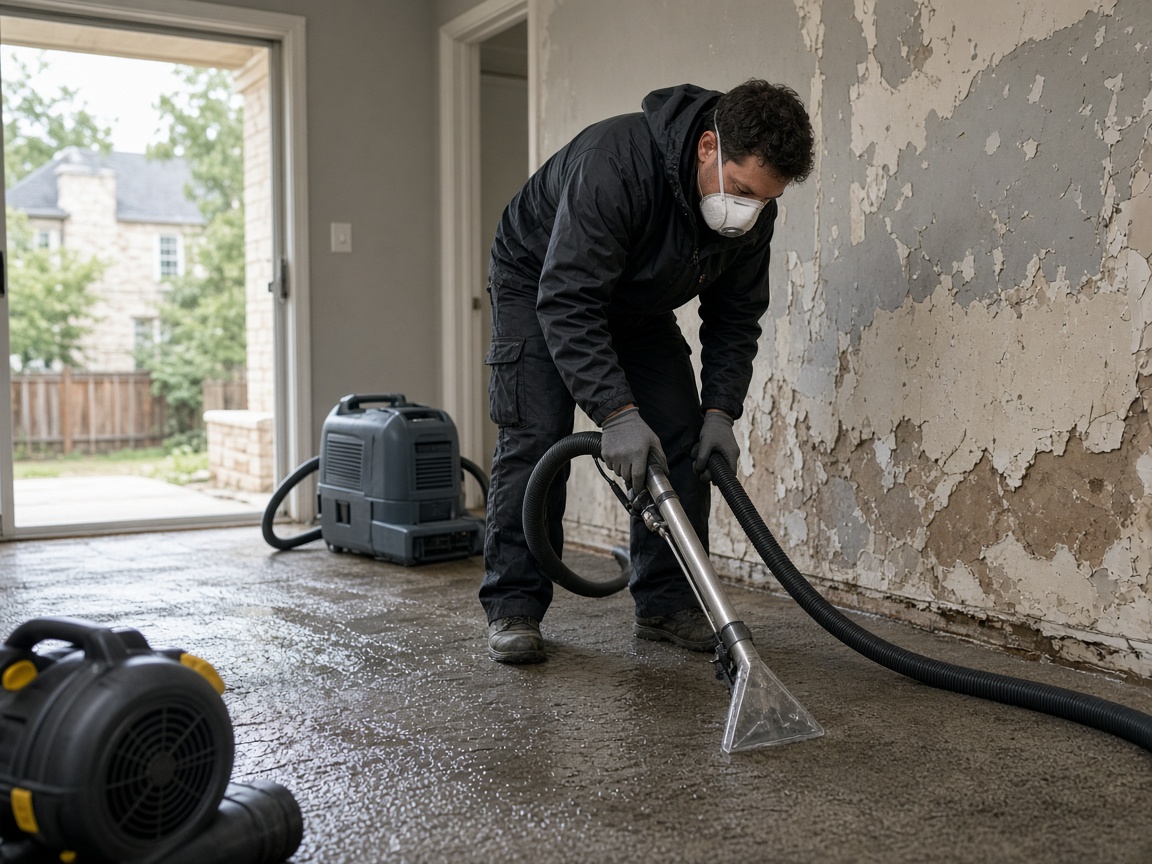
Austin’s hot humid summers turn minor flooding into prolonged moisture problems, especially in East Austin and Travis Heights where many homes built before 1970 have plaster walls and pier-and-beam foundations. Water from Lady Bird Lake overflows or Barton Creek flash floods seeps into crawl spaces and stays trapped because of the area’s expansive clay soils that expand and contract with moisture changes. Technicians must pull baseboards early and use moisture meters on every joist rather than relying on surface drying alone.
Round Rock and Pflugerville subdivisions often see sewage backups during heavy spring rains because older municipal lines cannot handle the volume. In these cases, Category 3 water requires full removal of affected insulation and subfloor sections rather than simple extraction. Westlake and Zilker properties with limestone retaining walls add another layer: water migrates behind the stone and reappears weeks later if weep holes are not cleared during the initial visit.
Mueller and Clarksville neighborhoods contain a mix of slab-on-grade and pier homes, so drying plans must account for both concrete moisture retention and hidden voids under hardwood floors. Dehumidifiers sized for 80-plus percent relative humidity are standard here from May through September. Skipping thermal imaging on these jobs leaves pockets of moisture that later support mold growth under the humid conditions typical after spring wildflower season.
Technician insight
In Austin the thing that catches most people out with Flood Damage Restoration is how quickly humidity re-soaks pier-and-beam homes in Travis Heights after a summer storm. Clay soil holds water against the foundation for days, and skipping daily moisture checks on the joists lets hidden mold start before homeowners notice any odor.
Flash Flooding In East Austin Bungalow
Heavy rain sent water under a 1940s pier-and-beam home near the Texas State Capitol. We found moisture trapped in subflooring and insulation that had wicked upward into bedroom walls. Extraction and targeted drying prevented mold growth that would have spread quickly in the season’s high humidity.
Flood Damage Restoration Services We Offer
✓Emergency Water Extraction
Rapid removal of standing water from flooded slabs and crawl spaces using truck-mounted pumps sized for Austin’s sudden downpours.
✓Structural Drying and Dehumidification
Placement of commercial air movers and dehumidifiers to pull moisture from plaster, limestone, and pier-and-beam framing common in Hyde Park and Clarksville homes.
✓Sewage Backup Restoration
Full containment and removal of contaminated water from municipal line failures that occur during heavy rains in East Austin and Mueller.
✓Mold Prevention After Flooding
Application of antimicrobial treatments and targeted drying to stop mold growth accelerated by Austin’s high summer humidity levels.
✓Hardwood Floor Restoration
Cupped and buckled flooring repair in Barton Hills and Zilker homes where clay soil movement pushes moisture upward through slabs.
Flood Damage Restoration Cost in Austin, TX
| Service | Typical Range | What Affects It |
|---|---|---|
| Initial Assessment And Moisture Mapping | Free | Includes thermal imaging of affected rooms |
| Water Extraction | $600–$1,800 | Varies by volume and whether sewage is present |
| Full Structural Drying | $900–$2,400 | Depends on home age and pier versus slab construction |
| Mold Prevention Treatment | $400–$950 | Added when humidity stays above 70 percent |
Ranges are typical for Austin, TX and confirmed with an exact written quote before any work starts.
How it works
- 1
On-Site Assessment
Technician inspects all affected rooms, measures moisture in walls and floors, and identifies hidden water paths created by Austin’s clay soils.
- 2
Water Removal
Extraction of standing and trapped water from slabs, crawl spaces, and wall cavities using equipment suited to local humidity.
- 3
Drying And Monitoring
Daily moisture readings and equipment adjustments until materials reach acceptable levels for Austin’s climate.
- 4
Restoration And Prevention
Replacement of damaged materials and installation of ventilation improvements to reduce future risk in humid conditions.
Pricing
Upfront quotes after inspection; price depends on water category, square footage affected, and materials involved.