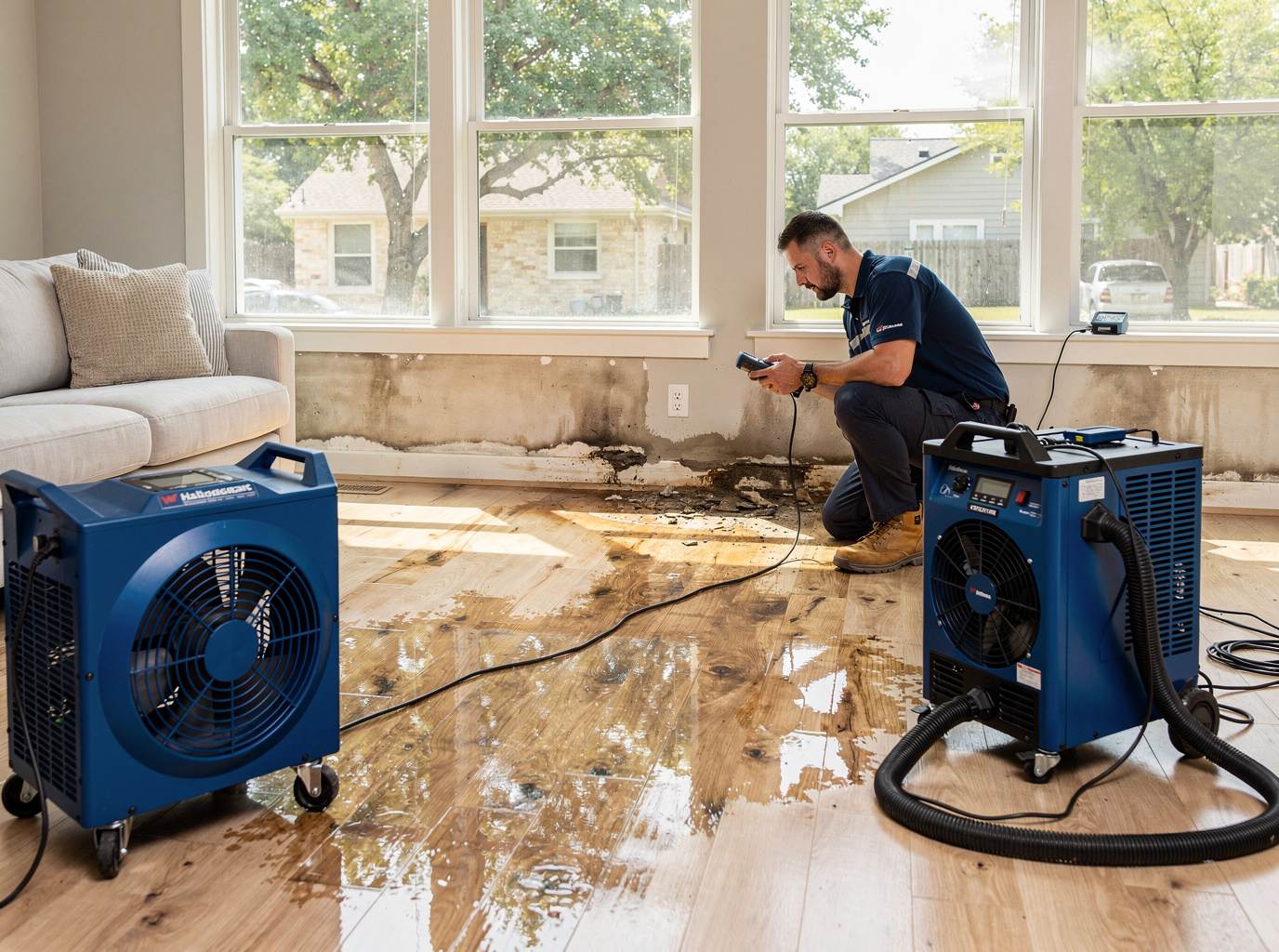
Austin summers bring high humidity that drives rapid mold growth behind drywall and under flooring in homes built before the 1980s. Neighborhoods such as Hyde Park and Clarksville have many pier-and-beam houses where moisture lingers in crawl spaces after roof leaks or pipe bursts. Restoration crews must pull baseboards, run commercial dehumidifiers for days, and treat subfloors with antimicrobial solutions before new materials go down.
Travis County soil shifts with seasonal rains, cracking foundations in East Austin and Barton Hills properties. Water migrates along these cracks into finished basements or garages. Technicians trace moisture with thermal cameras, remove saturated insulation, and install temporary supports while drying proceeds. Spring wildflower rains often trigger repeat calls from the same addresses when gutters overflow onto stucco walls.
Mild winters do not stop condensation issues around windows in Mueller and Westlake homes. Warm indoor air meets cooler exterior walls, creating hidden damp spots that homeowners miss until drywall softens. Restoration includes cutting out affected sections, drying wall cavities with directed air movers, and checking adjacent rooms for migration before closing up.
Technician insight
In Austin the thing that catches most people out with Residential Water Damage Restoration is how fast humidity turns a small pipe leak into mold behind baseboards in 1950s Hyde Park homes. The clay soil in Travis County keeps crawl spaces damp for weeks after a rain, so we always run dehumidifiers longer than homeowners expect.
Hidden Moisture in Zilker Bungalow
A homeowner in Zilker noticed soft flooring near the kitchen sink after a mild winter rain. We found water had traveled under the slab from a cracked supply line and wicked into the subfloor. Extraction, targeted drying, and new subfloor sections restored the area without opening the entire kitchen.
Residential Water Damage Restoration Services We Offer
✓Crawl Space Drying After Pipe Bursts
Remove standing water and install dehumidifiers in pier-and-beam homes common in Hyde Park and Clarksville to stop mold before it spreads to living areas.
✓Drywall and Insulation Removal
Cut out water-damaged walls and discard saturated insulation in East Austin bungalows where older plaster traps moisture against framing.
✓Foundation Crack Sealing and Drying
Address shifting Travis County soil cracks that let rainwater enter Barton Hills and Zilker garages, then dry and treat affected concrete.
✓Attic Moisture Extraction
Clear condensation and roof-leak damage in Mueller and Westlake attics before it drips into ceilings during humid summer months.
✓Subfloor Replacement
Replace warped plywood in South Congress and Travis Heights kitchens after appliance leaks, matching original joist spacing.
Residential Water Damage Restoration Cost in Austin, TX
| Service | Typical Range | What Affects It |
|---|---|---|
| Single-room extraction and drying | $800–$1,600 | Higher in older East Austin homes with plaster walls |
| Crawl space drying after leak | $1,200–$2,400 | Depends on access and length of humid summer run |
| Full bathroom subfloor replacement | $2,500–$4,000 | Includes joist inspection in Travis County pier-and-beam houses |
Ranges are typical for Austin, TX and confirmed with an exact written quote before any work starts.
How it works
- 1
On-Site Assessment
Technician arrives from 9711 Beck Cir, maps moisture with meters, and notes affected rooms in the specific Austin neighborhood.
- 2
Water Extraction
Remove standing water and pull baseboards to allow airflow in older pier-and-beam or slab homes.
- 3
Drying And Monitoring
Place air movers and dehumidifiers, then return daily to check readings until levels match pre-loss conditions.
- 4
Sanitizing And Repairs
Apply treatments to framing, replace damaged materials, and coordinate with local trades for final finishes.
Pricing
Pricing varies by square footage affected and drying time required in Austin humidity.